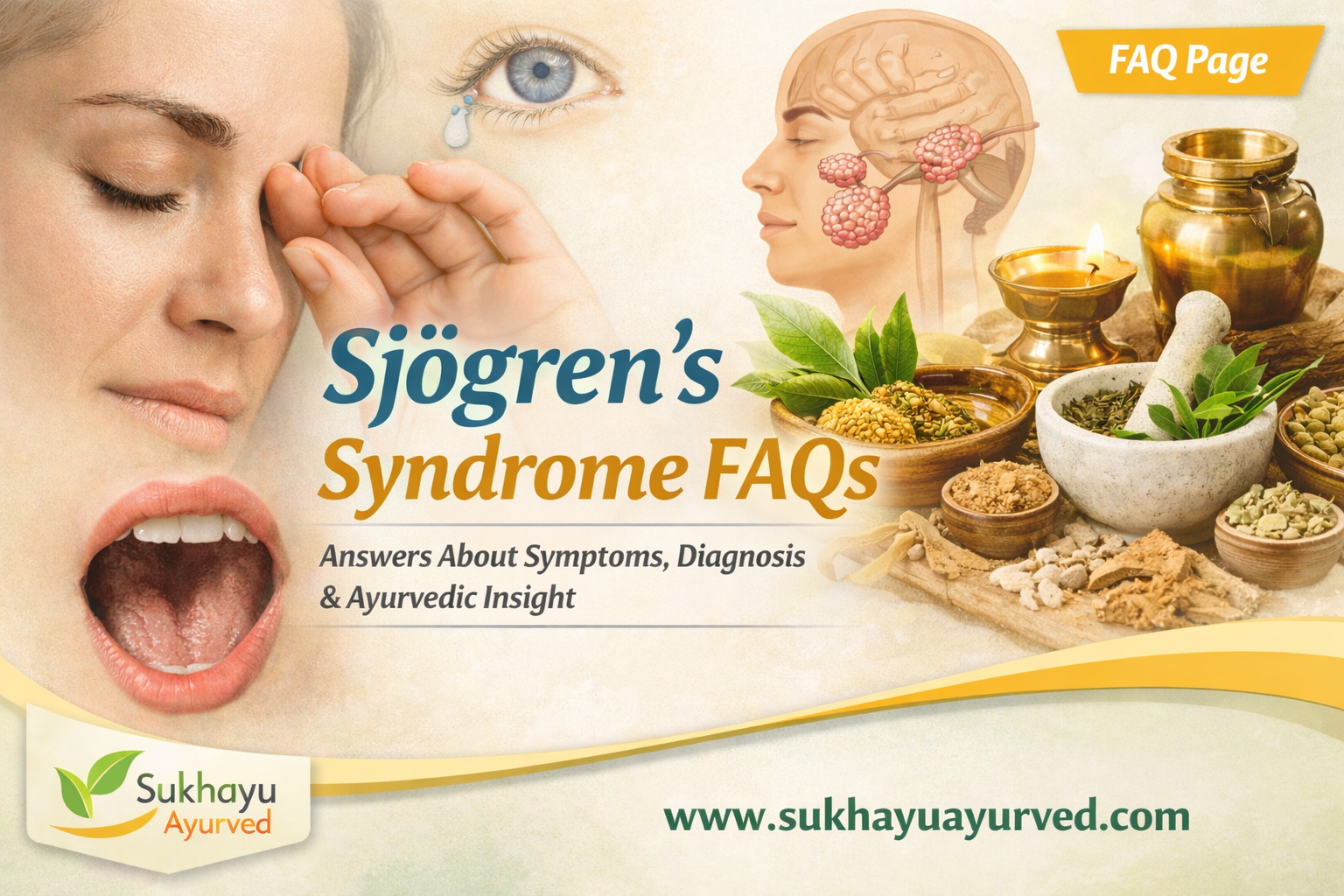
Sjögren’s Syndrome is often misunderstood because its symptoms can appear simple at first — dryness of eyes, mouth, fatigue, or joint discomfort — yet the condition itself is complex and systemic.
Many patients spend years moving between dentists, eye specialists, and physicians before a clear diagnosis is made.
This FAQ guide addresses the most common questions people ask after hearing the term Sjögren’s Syndrome. The aim is to clarify expectations, reduce confusion, and help patients understand what matters most when managing the condition.
Understanding the Condition
What is Sjögren’s Syndrome?
Sjögren’s Syndrome is an autoimmune condition in which the immune system primarily targets moisture-producing glands, especially those responsible for tears and saliva. This leads to dryness of eyes and mouth, but the condition can also affect joints, nerves, lungs, and other organs. It may occur alone (primary) or alongside other autoimmune diseases.
Why do eyes and mouth become dry in this condition?
Dryness occurs because immune cells infiltrate and damage glands that produce fluids. Over time, tear and saliva production decreases, causing irritation, difficulty swallowing dry foods, dental issues, and eye discomfort. The dryness is not simply due to dehydration — it reflects underlying immune activity. The problem starts due to the impact of autoimmunity on the blood vessels.
Is Sjögren’s Syndrome a serious disease?
Severity varies widely.
Some individuals experience mostly dryness and fatigue, while others develop systemic involvement affecting nerves, kidneys, or lungs. Early recognition and regular monitoring help identify complications before they progress. But when the condition is ignored- it can lead to serious concerns too. So this is not advisable to overlook any progress of the disease.
Who is more likely to develop Sjögren’s Syndrome?
It is more commonly diagnosed in women, often between the ages of 30 and 60. However, it can occur in any gender or age group. Genetic predisposition, environmental triggers, and immune dysregulation are believed to contribute more in females.
Diagnosis & Testing
How is Sjögren’s Syndrome diagnosed?
Diagnosis usually combines symptoms, blood tests, eye tests, and sometimes a minor salivary gland biopsy. No single test confirms it alone. Doctors look for a pattern — persistent dryness, specific antibodies, and gland involvement — before reaching a conclusion.
Which blood tests are commonly checked?
Many patients are tested for autoimmune markers such as ANA, anti-SSA (Ro), and anti-SSB (La) antibodies. However, some people with Sjögren’s may not show positive results initially, which is why clinical evaluation remains essential.
Can imaging or scans confirm Sjögren’s Syndrome?
Imaging may help evaluate gland structure or organ involvement but does not replace clinical diagnosis. Ultrasound of salivary glands or specialized tests measuring tear production are often more useful than general scans.
Why does diagnosis sometimes take years?
Symptoms overlap with other conditions like chronic fatigue, fibromyalgia, thyroid disorders, or menopause-related dryness. Because early signs may appear mild or nonspecific, patients often receive multiple provisional diagnoses before the autoimmune nature becomes clear.
Symptoms & Daily Concerns
Apart from dryness, what other symptoms can occur?
Patients may experience fatigue, joint pain, muscle aches, brain fog, or numbness- this leads to the confusion as Rheumatoid arthritis in general. In other cases the doubt goes towards Lupus/SLE, because some develop skin dryness, digestive discomfort, or sensitivity to light. Not everyone experiences the same symptom pattern.
Why is fatigue so common in Sjögren’s Syndrome?
Fatigue is believed to result from immune system activation and chronic inflammation rather than lack of sleep alone. It can fluctuate — some days feel manageable, while others are unexpectedly draining.
Does Sjögren’s Syndrome affect teeth and oral health?
Yes. Reduced saliva increases risk of cavities, gum disease, and oral infections. Regular dental care and hydration strategies become important parts of long-term management.
Can stress make symptoms worse?
Many patients notice that physical or emotional stress amplifies fatigue, dryness, or joint discomfort. While stress does not cause the disease itself, it can influence how intensely symptoms are felt.
Treatment & Management
Is there a cure for Sjögren’s Syndrome?
Currently, there is no single cure. Management focuses on controlling symptoms, reducing inflammation, and monitoring systemic involvement. Treatment plans differ depending on severity and organ involvement.
What treatments are usually recommended?
Management may include artificial tears, saliva substitutes, medications to stimulate gland function, anti-inflammatory drugs, or immunomodulatory therapies in more severe cases. Lifestyle adjustments — hydration, eye protection, and oral care — also play an important role.
Do symptoms stay the same throughout life?
Symptoms can change over time. Some people experience long stable phases, while others notice gradual progression or new manifestations. Regular follow-ups help detect changes early.
Can Sjögren’s Syndrome lead to other health problems?
In certain cases, patients may develop complications such as nerve involvement, lung inflammation, or increased risk of lymphomas. These outcomes are not universal but underline the need for ongoing medical supervision.
Prognosis & Lifestyle Questions
Can someone live a normal life with Sjögren’s Syndrome?
Many patients maintain active professional and personal lives with appropriate care. Understanding triggers, pacing daily activities, and following a consistent management plan often improve quality of life.
Does diet or hydration influence symptoms?
Staying well hydrated helps manage dryness symptoms, although it does not treat the autoimmune process itself. Some individuals notice that certain foods worsen oral irritation or fatigue, but responses vary widely.
Should patients avoid exercise?
Most people benefit from gentle, regular movement. Exercise supports joint flexibility, mood, and energy levels. The key is consistency rather than intensity, especially during periods of fatigue.
When should someone seek medical evaluation urgently?
Persistent swelling of glands, unexplained weight loss, severe fatigue, new neurological symptoms, or breathing issues should be evaluated promptly. Changes in symptom pattern are often more important than isolated discomfort.
Ayurvedic Perspective
How is Sjögren’s Syndrome understood from an Ayurvedic viewpoint?
In Ayurveda, symptoms like persistent dryness, fatigue, joint discomfort, and glandular depletion are usually interpreted through functional imbalance rather than a single disease label. This condition is closely associated with Vataja Vatarakta- an autoimmune condition where vitiated blood hampers the small capillary beds near the glands.
Why does dryness become a dominant symptom?
Ayurveda describes dryness as a sign of disturbed internal lubrication and impaired tissue support (disturbed Vata Dosha). When body fluids and nourishment pathways weaken, structures like eyes, mouth, and skin may lose natural moisture. Management therefore looks at restoring internal balance instead of only external lubrication.
Does Ayurveda consider Sjögren’s Syndrome a local or systemic condition?
It is generally approached as systemic. Even if dryness begins in eyes or mouth, assessment includes digestion, sleep, stress response, joint health, and overall vitality. The emphasis is on understanding why tissue resilience has reduced over time.
How does Ayurvedic assessment differ from conventional diagnosis?
While laboratory tests remain important, Ayurvedic evaluation observes patterns such as dryness tendency, fatigue rhythm, appetite changes, bowel patterns, sleep quality, and emotional stress. The aim is to understand the underlying imbalance contributing to symptoms.
Can Ayurvedic management help with fatigue in Sjögren’s Syndrome?
Fatigue is often addressed by improving digestive strength, supporting tissue nourishment, and stabilising daily rhythms. Rather than targeting fatigue alone, the approach attempts to improve overall systemic balance, which may indirectly influence energy levels.
Is dryness managed only through oils or local therapies?
Local care may help comfort, but Ayurvedic thinking emphasises internal correction — digestion, nutrition, and lifestyle alignment — because dryness is seen as a deeper systemic issue rather than only a surface symptom.
Why do symptoms fluctuate even when treatment is ongoing?
Ayurveda recognises that chronic autoimmune conditions move through phases of stability and aggravation depending on diet, stress, climate, and routine. Fluctuation does not always indicate treatment failure; it often reflects changing internal balance.
Can Ayurveda be integrated with modern medical care for Sjögren’s Syndrome?
Many patients use supportive Ayurvedic measures alongside conventional care under medical supervision. The goal is to improve comfort, resilience, and long-term stability while continuing necessary monitoring for systemic complications.
What Patients Often Misunderstand
- Dryness alone does not define the disease; it is a systemic immune condition.
- Normal blood tests do not always exclude Sjögren’s Syndrome.
- Symptoms may fluctuate, which does not mean the condition has resolved.
- Management focuses on long-term stability rather than quick fixes.
Sjögren’s Syndrome can appear subtle at first but deserves thoughtful evaluation because it affects more than moisture glands alone. Understanding how symptoms evolve, why diagnosis takes time, and what realistic management looks like helps reduce uncertainty for patients and families. FAQs provide clarity, but individual assessment remains essential because the condition varies widely from person to person.
If You’re Struggling With Similar Symptoms
Persistent dryness, fatigue, or unexplained autoimmune symptoms should be assessed comprehensively. A detailed history, laboratory review, and clinical evaluation together help determine the most appropriate direction for care.