NABH CertifiedEmpanelled: RGHS & CGHSJaipur, India

Herniated discs at C6–C7: Case Study (Victoria Bird 42 Years Female)
Orthopedic
Comprehensive assessment of patient was done, from Ayurvedic perspective → Restoration of functional mobility. No requirement for pain medications. Improved mental clarity and emotional well-being. Resumption of normal daily activities
Baseline Condition
Ms. Victoria Bird presented with a long-standing cervical spine injury following a road traffic accident in April 2013, after which she was diagnosed with a prolapsed disc at C5 level.
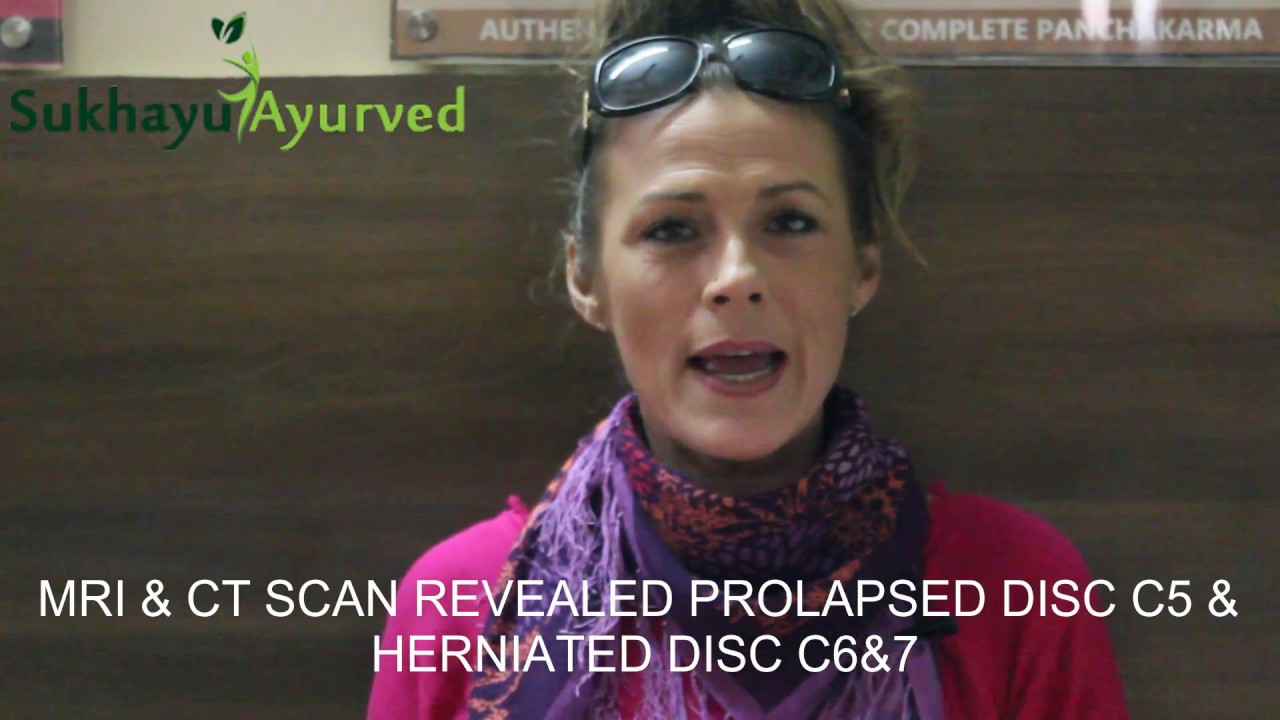
Over the next two years, her symptoms progressed, and in April 2015, she suffered a Transient Ischemic Attack (TIA). Subsequent MRI and CT imaging revealed:
Prolapsed disc at C5
Herniated discs at C6–C7
Associated cervical degenerative changes
She reported:
Continuous neck pain
Radiating pain to the right arm
Pins and needles, numbness, and marked weakness in the right upper limb
Difficulty in sleeping, driving, personal care, and household activities
Significant reduction in quality of life
Anxiety, migraines, and emotional distress secondary to chronic pain
Panchakarma Protocols
- Kashaya Basti & Taila Basti
- Greeva Basti & Greeva Pichu
- Patra Pinda Swedana
- Nadee Swedana
- Pizhichil (7 sittings)
- Lepana on Neck
Improvement Details
- Resolution of cervical radiculopathy
- Restoration of limb strength and sensation
- Improved cervical mobility
- Discontinuation of pain medications
- Avoidance of surgery
- Sustained functional recovery
Treatment Timeline
▶
Comprehensive assessment of patient was done, from Ayurvedic perspective
Treatment begins
1
Week 1 - Panchakarma+Medicines
Initial stiffness and discomfort as chronic muscle guarding began to release
2
Week 2- Panchakarma+Medicines+Yoga Asanas
Noticeable reduction in neck pain and arm radiationImproved sleep quality and reduced anxiety
3
Week 3- Recovery phase
70% symptomatic improvement Improved limb strength and range of motion
4
4-Week Follow-Up
Complete resolution of radicular pain
✓
Restoration of functional mobility. No requirement for pain medications. Improved mental clarity and emotional well-being. Resumption of normal daily activities
Assessment complete
Image Gallery

C4-C5, C5-C6 Disc protrusion ayurvedic treatment

C5-C6 Cervical disc issue
Video Gallery
Cervical C5-C6 Slip disc Cure without Surgery
Outcome Summary
At follow-up, Ms. Bird reported full functional recovery, absence of pain, and restoration of quality of life. She was able to resume domestic responsibilities and caregiving without discomfort. Importantly, the recovery was achieved without surgical intervention and without long-term pharmacological dependence.
Results vary by individual. No False Claims.
Related Information
Now offering
Ayurveda Courses & Clinical Training
Learn authentic, clinical Ayurveda inside a working hospital — for students, practitioners & medical professionals worldwide.
Explore Courses