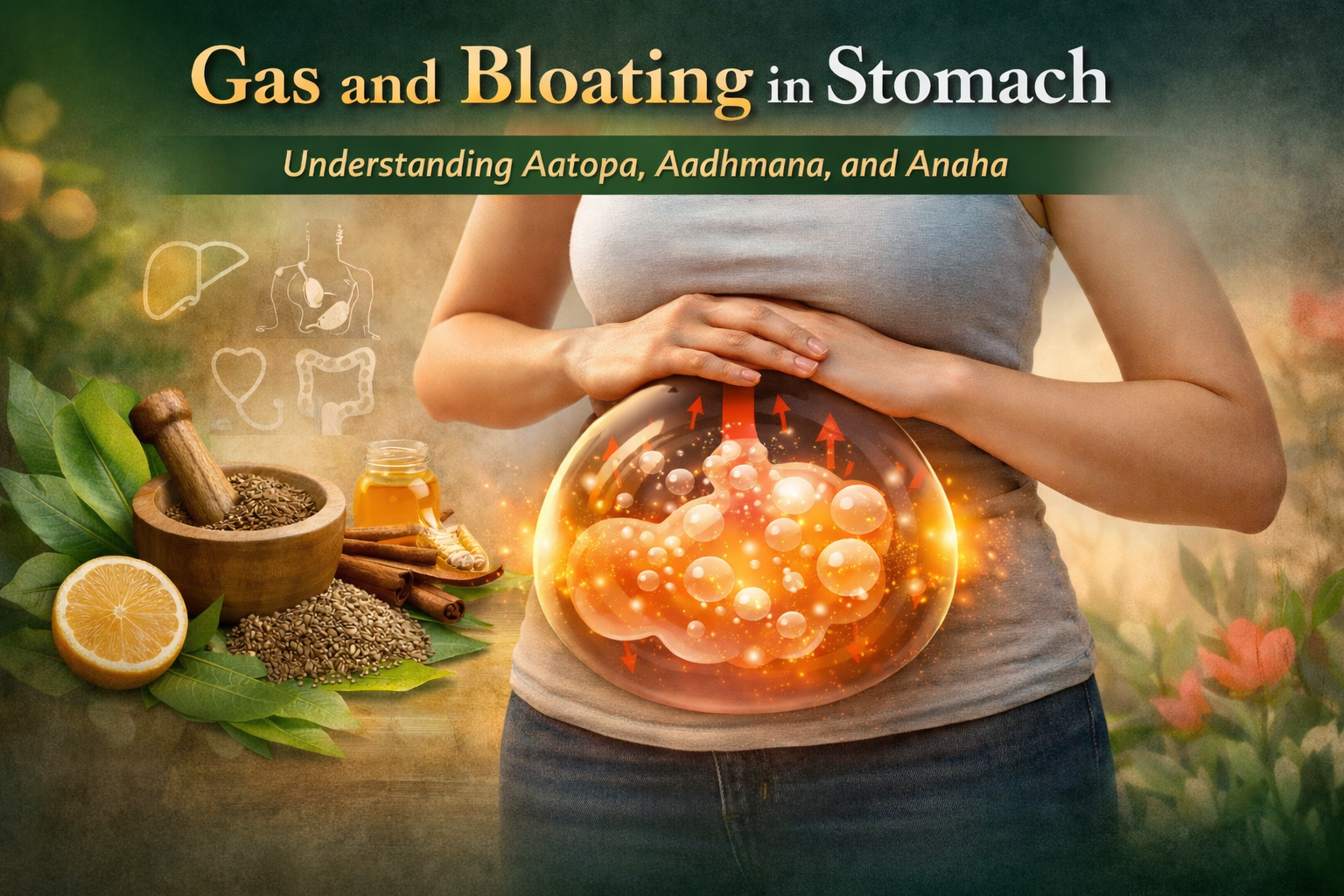
Every day, people say the same sentence: “Too much gas… abdomen feels like a balloon.”
For some, it is occasional discomfort. For many others, it becomes a daily issue — stomach swelling after eating, tightness that feels like pressure, gas pain on the left side of abdomen, or even discomfort spreading toward chest or back.
Most individuals try quick fixes first. Antacids, OTC “gas tablets,” cumin seeds, cinnamon water, lemon with warm water — the list is long. Yet the relief is short-lived. The problem returns after every meal, and people begin to wonder whether gas is due to fatty liver, weak digestion, IBS, or something more serious.
The real reason many treatments fail is simple: gas is treated as a single problem, while it actually exists in multiple patterns.
Why “Gas” Is Not One Disease
Search trends show people asking:
- Why stomach feels tight or full?
- Gas after every meal — reason?
- Gas causing chest pain or back pain?
- Is gas sign of liver problem?
- Gas or acidity — what is the difference?
These questions arise because symptoms overlap. Two people may complain of gas and bloating in stomach, yet their internal patterns may be entirely different. Without identifying that pattern, treatment becomes guesswork.
Ayurveda approaches this differently. Instead of simplifying everything as acidity or weak digestion, classical understanding describes three look-alike conditions — Āṭopa, Ādhmāna, and Ānāha — each with a distinct mechanism.
Pattern 1: Āṭopa — When Gas Moves But Does Not Settle
This pattern is often overlooked because the abdomen may not look heavily swollen.
Typical experience
The person feels frequent rumbling, shifting pressure, or trapped gas symptoms that move from one area to another. There may be mild discomfort rather than intense tightness. Passing flatus or changing posture gives temporary relief.
Why treatment fails
Many people take antacids thinking it is acidity. However, the primary issue here is irregular movement, not acid excess. Random home remedies for bloating may work temporarily but do not stabilize the pattern.
Pattern 2: Ādhmāna — When Abdomen Feels Tight and Inflated
This is the situation most people describe as “football-like” swelling.
Typical experience
The stomach feels stretched after eating, even small meals. Tightness may extend upward, creating pressure in chest or back. Some people worry about heart problems because of the heaviness and breath restriction.
Why treatment fails
Quick gas pain relief methods may reduce discomfort briefly but do not address the deeper distension pattern. Repeated antacid use may suppress symptoms without resolving the underlying mechanism.
Pattern 3: Ānāha — When Gas Is Linked With Obstruction
Chronic cases where gas occurs daily, especially with constipation, often fall into this pattern.
Typical experience
There is heaviness, incomplete evacuation, and a feeling of blockage rather than simple bloating. Gas and IBS symptoms may appear together. People frequently search for how to release trapped gas instantly because the pressure feels persistent.
Why treatment fails
Here the issue is not just gas formation but impaired movement. Remedies meant for simple bloating may worsen heaviness if the underlying obstruction is not addressed.
Gas or Acidity: Understanding the Difference
Many individuals confuse gas with acidity because both create discomfort after meals. However, the sensations differ.
Acidity usually produces burning, sourness, or reflux. Gas more often creates pressure, fullness, or tightness. When gas causes chest pain or back pain, it is typically due to internal pressure rather than acid reflux. Treating pressure-based symptoms with acid-suppressing medication alone often leads to incomplete relief.
Why “Best Medicine for Gas” Is the Wrong Question
There is no single best medicine for gas because each pattern requires a different approach. A remedy that improves moving gas may intensify abdominal tightness. A treatment meant for obstruction may feel excessive for mild bloating.
This explains why many people say:
- Gas forms daily despite medicines.
- Gas after every meal reason is unclear.
- Home remedies work for others but not for them.
The issue is rarely lack of options; it is lack of precise identification.
A Structured, Solution-Oriented Approach
Instead of chasing quick relief, a clearer pathway begins with observation and pattern recognition.
First, notice timing. Does stomach swelling after eating appear immediately or hours later?
Second, observe movement. Does discomfort shift location or remain fixed and tight?
Third, assess bowel rhythm. Does relief come after passing stool or does fullness remain?
These simple observations often reveal whether the pattern resembles Āṭopa, Ādhmāna, or Ānāha — and guide a more targeted line of care.
Practical Measures That May Reduce Daily Discomfort
Consistent meal spacing often helps more than continuous snacking. Gentle walking after meals supports natural movement better than lying down immediately. Repeated reliance on OTC gas tablets may mask patterns rather than correct them, so moderation becomes important.
These measures are supportive, not substitutes for evaluation, but they reduce the intensity of day-to-day symptoms while deeper assessment is undertaken.
When Gas Needs Medical Attention
Persistent bloating deserves attention if it appears with unexplained weight loss, severe localized pain, or continuous swelling even with small meals. Gas due to constipation, IBS-like symptoms, or recurring chest pressure should not be ignored. A structured clinical evaluation helps differentiate functional patterns from other underlying causes.
The Takeaway
Gas and bloating in stomach is not one condition. It is a symptom shared by different internal patterns. When every complaint is treated with the same tablet or home remedy, relief remains temporary.
Understanding whether the experience resembles moving gas (Āṭopa), tight distension (Ādhmāna), or obstructive fullness (Ānāha) changes the direction of treatment completely. A precise diagnosis does not complicate care — it simplifies it, making long-term relief more achievable and less dependent on constant trial and error.