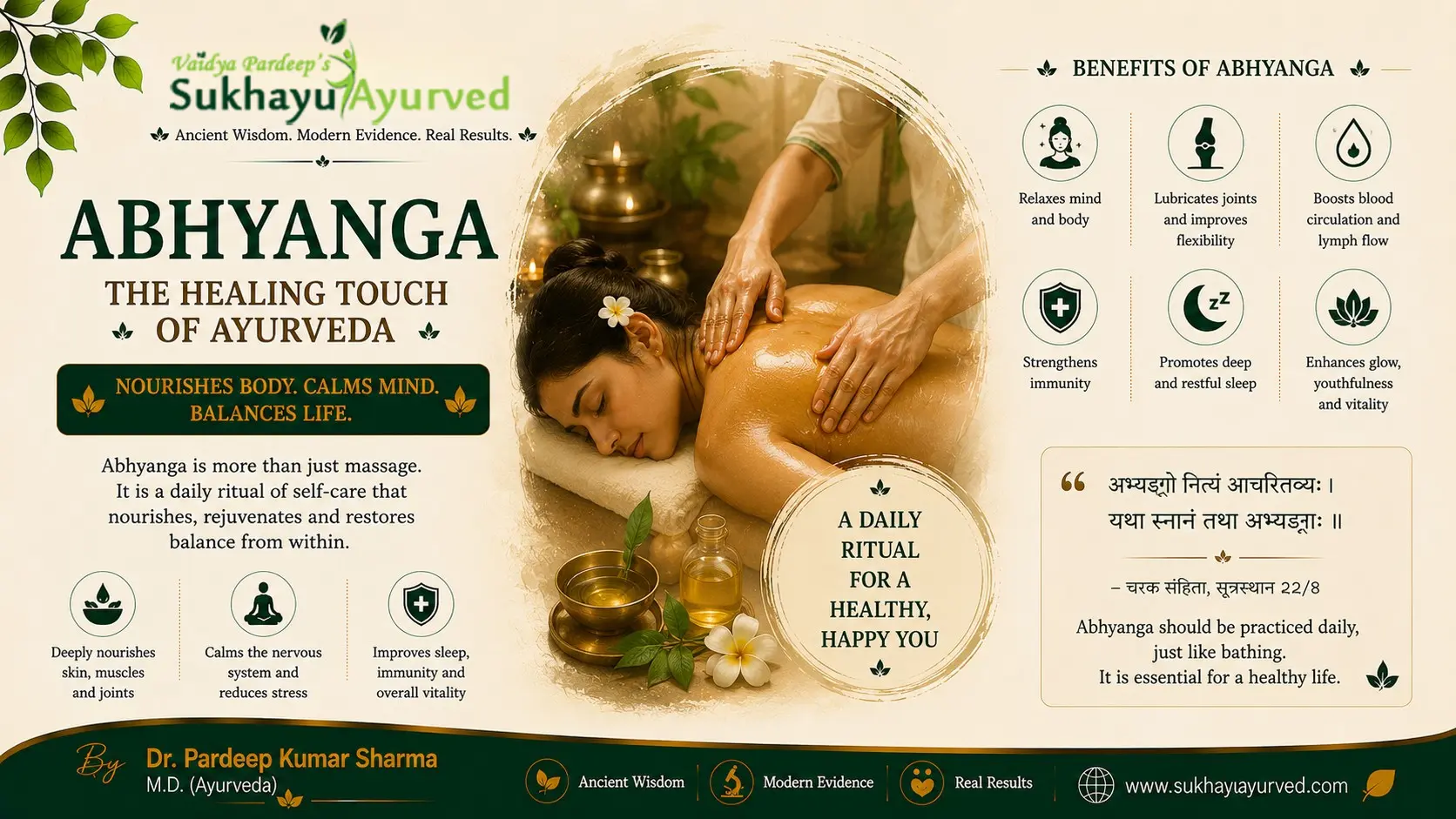
Before you were a person, you were a single flat sheet of tissue folding in on itself. In the third week of embryonic life, one layer — the ectoderm — begins to divide the work between two futures. One part of it sinks inward and becomes the brain and the spinal cord. Another part stays on the surface and becomes the skin. The nervous system and the skin are not neighbours who learned to cooperate. They are siblings from the same cell, separated only by direction of travel.
This is not a metaphor I reach for to make a point sound larger than it is. It is the reason the skin never stopped speaking the nervous system's language. The two tissues signal through the same neurotransmitters, the same neuropeptides, the same growth factors — a shared chemical vocabulary that persists for the whole of a human life. Modern researchers have a name for this continuity: the brain–skin axis. The skin is not a passive covering that keeps the inside in and the weather out. It is an active sensory organ, wired throughout with mechanoreceptors that read fine touch, pressure and vibration; thermoreceptors that read warmth and cold; and nociceptors that register damage. Every one of these is a wire that runs, eventually, to the central nervous system.
Hold that fact in your mind, because it changes what happens when you put oil on the skin. And then hold it against a word that has done more damage to this procedure than any single mistranslation in Ayurveda: massage.
Abhyanga is not a massage
I need to be precise here, the way I am precise about it with patients who come in and say, "Doctor, I already get regular oil massages — why do I need this?"
Abhyanga is a limb of Snehana — oleation, the therapeutic use of unctuous substances. Snehana has two routes: internal, where medicated fats are taken into the body through the mouth, and external, where they are applied over the skin. Abhyanga is the external route of Snehana. That is its definition and its purpose. It is not, in the classical sense, a manipulation of muscle at all.
A standard oil massage works on muscle. The hands knead, the tension releases, the oil is a lubricant that lets the hands move. The oil is a means; the muscle is the target. Abhyanga inverts this entirely. In Abhyanga the muscle is the means and the oil is the target — or more exactly, the delivery of the oil is the target. The skin is used as a gateway, and heavy quantities of warm medicated oil are carried through it into the deeper tissues of the body.
This is possible because the skin is the largest organ of the body and a genuinely capable one at absorption. Fats — oils and ghee — are the ideal carriers for this. They cross the skin readily, and as they cross, they carry the medicines processed into them deep inside. When you understand this, the phrase "oil massage" collapses. Abhyanga was never a massage that used oil. It was an oil-delivery procedure that got translated, badly, into the only word the West had for "someone rubbing oil on skin."
Both things involve oil on skin. That is the entire basis of the confusion, and it is not enough.
What "acts on the nervous system" actually means
Here is where the brain–skin axis stops being an interesting piece of embryology and becomes the working logic of the treatment.
In Ayurveda, Vata — the principle of movement, of the nervous system, of everything dry, rough and mobile — resides in the skin. It resides there specifically through the tactile interface, the receptors that read touch. Pitta, too, is abundant in the skin, by virtue of Rakta (blood); the skin is richly vascular, and Bhrajaka Pitta is seated there. So the skin is not a neutral surface you happen to be oiling. It is a place where two of the three Doshas are directly, physically accessible. When you apply warm medicated oil to the skin, you are not moisturising it. You are reaching Vata through its own seat and Pitta through its own blood supply.
The single quality of Sneha — unctuousness, oiliness — is the direct opposite of everything Vata is. Vata is ruksha (dry), khara (rough), chala (mobile, unstable). Sneha is smooth, heavy, settling. This is why oleation pacifies Vata: not by suggestion, not by relaxation, but by opposing quality with quality. And it holds across every type of Vata, not one convenient subtype. Wherever Vata is disturbed — in the mind, in the senses, in the muscles, in sleep — Sneha is its antagonist.
The parallel observation from the receptor side runs alongside this and does not replace it. Slow, sustained, warm tactile input across the whole skin is precisely the kind of signal the mechanoreceptors carry inward toward the central nervous system. The two accounts — the classical Vata–Sneha logic and the mechanoreceptor pathway of the brain–skin axis — describe the same event from two windows. I keep them side by side. I do not use one to prove the other. The classical mechanism stood on its own for two thousand years before anyone had a word for a neuropeptide.
What I actually prescribe it for
In the clinic, Abhyanga sits in two very different places, and confusing them is the root of most of what goes wrong with it.
First, it is Purvakarma — the preparatory procedure. Before the major Panchakarma treatments, the body has to be readied, and external oleation is part of how it is prepared. Here Abhyanga is not the treatment; it is what makes the treatment possible.
Second, it is a standalone therapy in its own right. I prescribe it as the treatment itself in three situations, and I want to be honest about what it is doing in each.
Muscle wasting. This is the case that most tempts a physician to overclaim, so let me be careful. In wasting — whether the neuromuscular wasting I see in neurological disease, the debility that follows long illness, or age-related loss — the instinct is to say the oil "rebuilds the muscle." It does not, and to say so would be a blunt lie. The dhatu — the tissue — is not a standalone thing that you can oil back into existence. Dhatus are dependent on Doshas; they are governed by them. Muscle wasting is not a muscle problem to be solved at the muscle. It is a Dosha disturbance expressing itself through the tissue, read here through the Vata and Pitta seats in the skin. Abhyanga's real job in this protocol is as a vehicle: it carries the virya — the potency — of a carefully chosen medicated oil deep enough to act. The rebuilding, when it happens, belongs to the whole protocol — the oil, the oral medicines, the diet, all of it together — not to a pair of hands and a bottle. This is exactly why, for muscular conditions, I lean on the fuller apparatus of therapies like Pinda Sweda for muscular health, not oil application alone.
Rukshata. Pathological dryness. This is systemic Vata vitiation made visible — the ruksha and khara qualities surfacing across the skin, the joints, the nervous system all at once. In Rukshata, external Snehana and internal Snehana are equally important. Neither is the senior partner. I do not treat serious dryness by oiling the outside while ignoring the inside, or the reverse. They are two limbs of one oleation, and the correction needs both.
Insomnia. This is the case closest to the promise in the title — Abhyanga acting on the nervous system rather than the muscle. And here the mechanism is not one lever but a convergence: the tactile input through the skin's mechanoreceptors settling the system inward, the oil's own quality opposing Vata's restless mobility, and the timing and site of application all working at once. Every type of Vata pacifies through Sneha, and the Vata that breaks sleep is no exception. This is why I distinguish it so firmly from "relaxation" — relaxation is a mood; this is a Dosha being physically pacified. For the fuller picture of how we approach broken sleep, I direct patients to our writing on Ayurvedic management of sleep disorders and insomnia.
How it is actually done — and where it goes wrong
If you watched an untrained person perform Abhyanga, here is what I would correct.
Direction. The strokes follow Anuloma — the natural direction, along the flow, along the lie of the body's channels. Not the vigorous cross-grain kneading of a sports rub. Direction in Abhyanga is not decorative. It follows physiology.
The oil. Warmed — lukewarm to warm, and titrated to the individual patient, not to a fixed thermostat. The warmth matters for absorption; the individualisation matters because a body's tolerance is a clinical variable, not a spa setting.
The sites. Classical Abhyanga begins from Murdha (the head) and Pada (the feet) — the two poles given particular attention, because of what is seated at each.
The time. Done properly, it takes forty-five to sixty minutes. Not the fifteen-minute oil-rub sold as "Abhyanga" on a spa menu. The duration is not indulgence. It is what the absorption requires.
Who it is not for — and why that is a physician's decision
This is where the categorical distinction I drew earlier stops being academic and starts protecting people.
Abhyanga is contraindicated in Ama — the state of undigested metabolic toxin. Oiling a body loaded with Ama drives things in exactly the wrong direction; you are adding heaviness and blockage to a system already clogged. It is contraindicated in Mandagni — a weak digestive fire — for the same underlying reason: oleation over a low Agni compounds the problem it should be solving. And it is contraindicated over severe skin plaques and wounds, where the surface itself forbids it.
Notice that all three of these are timing and judgment calls. They are not a checklist a patient reads to decide whether to oil themselves this morning. And that is the whole point:
Abhyanga is a clinical procedure. Applying oil in a daily routine is something else entirely.
Both are real. The classical texts prescribe daily oiling — as part of Dinacharya, the daily regimen — for the healthy person, to keep Vata from accumulating, to slow ageing, to hold off fatigue. That practice is legitimate and valuable. But it is Sneha application, not clinical Abhyanga. It carries no diagnosis, no oil selected to a condition, no judgment about Ama or Agni, no consequence beyond the general good of oiling a healthy body. Clinical Abhyanga is a different act with a different intent, a different dose and a different weight of responsibility. And the spa "oil massage" is a third thing again — muscle manipulation with oil as a lubricant, neither the daily Sneha of Dinacharya nor the clinical procedure of the treatment room.
Three acts. One shared ingredient. It is worth keeping them separate, because collapsing them is exactly how a genuine therapy gets reduced to a menu item.
The oil is a decision, not a default
One more correction, because it comes up constantly. People assume Abhyanga means sesame oil, or that any single oil will do. It does not, and it will not. Oil selection in clinical Abhyanga is a wide spectrum — a large range of medicated oils, each processed through samskara with specific herbs, each matched to a specific clinical picture. Plain sesame oil alone, or any single oil used by default, is not clinical Abhyanga. The intelligence of the treatment lives precisely in that selection, which is why it is made in person, by a physician, and not read off a chart.
The larger shape of external Snehana
Once you see Abhyanga as the external limb of Snehana rather than as "a massage," a whole family of treatments comes into focus as variations on one principle. Kati Basti, the pooled oil retention over the lower back, is external Snehana held in place over a region. Udvartana and Pizhichil are further expressions of the same external oleation principle, shaped to different purposes. Even the family of Basti therapies shares the logic of delivering medicated Sneha to where it must act. These are not separate inventions. They are one principle — reaching the deep body through Sneha — applied at different sites, in different forms, for different ends. Abhyanga is where that principle begins.
Closing
We tend to think of the skin as the edge of ourselves — the boundary, the wrapping. The embryology says otherwise: the skin is the nervous system turned outward, the brain's oldest sibling, still fluent in its language. When warm medicated oil is drawn slowly through it, something is being spoken to that runs far deeper than the surface it touches. That is why Abhyanga was never about relaxation, and never about muscle. It was always a conversation with the system that governs movement, sensation and sleep — conducted through the one organ that has been listening since the third week of life.
Cure is divine. Treatment is possible.
Dr. Pardeep Sharma, M.D. (Ayurveda) is the founder of Sukhayu Ayurved, Jaipur. With over 20 years of clinical experience in Ayurvedic management of orthopedic, neurological and autoimmune conditions.
Medical disclaimer: This article is for educational purposes and describes clinical Ayurvedic reasoning. It is not a prescription or a substitute for in-person consultation. Abhyanga as a clinical procedure, oil selection, and its contraindications are physician judgments made in person. Please consult a qualified physician before beginning any therapy. To consult Dr. Sharma, book an appointment.